Thomas Edison National Historical Park
Going to Thomas Edison National Historical Park was kind of a light bulb moment for me in many ways.
This sprawling complex, tucked away in West Orange, NJ, is the laboratory where Edison and his team of inventors developed everything from motion picture technology to the precursor to the Foreman Grill.
The “wizard of Menlo Park” moved his base of operations here from downtown Manhattan in 1887, almost a decade after gaining fame as the inventor of the phonograph and the light bulb.
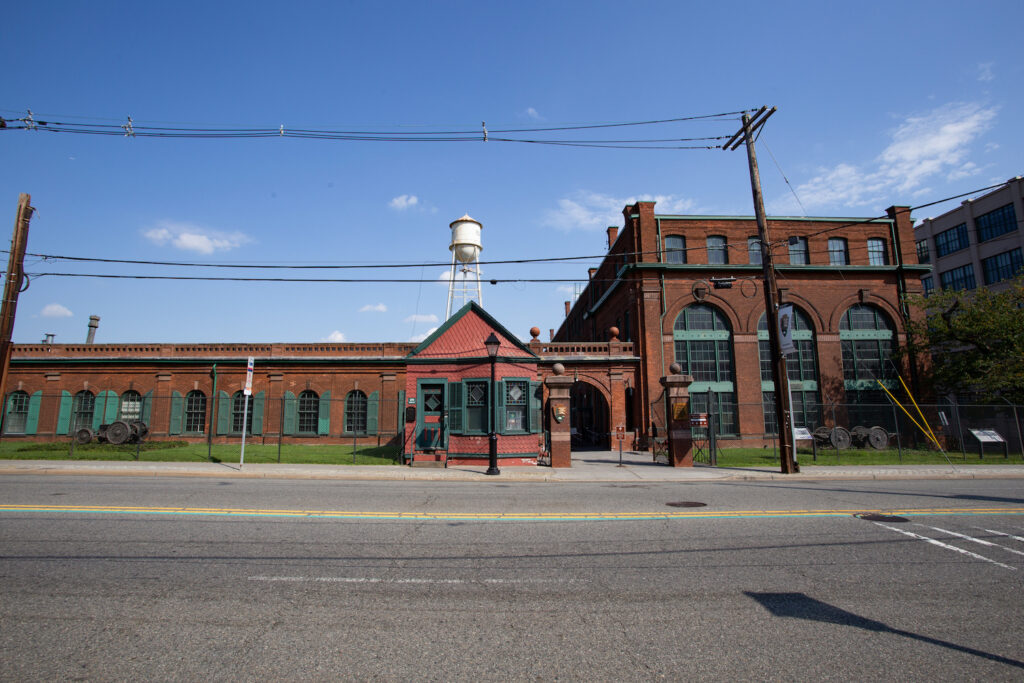
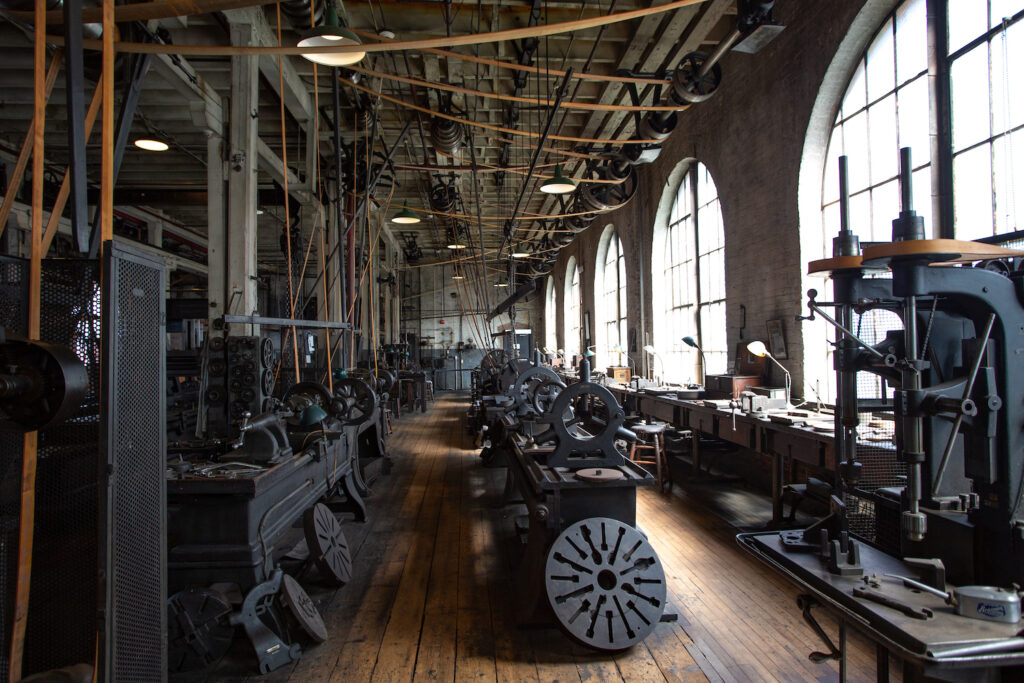
With dedicated machine shops, chemistry labs, and lots of space for experimenting, the labs were a massive operations base for the minds at work, and the sheer amount of stuff in this place is a testament to the creative process.
Above the machine shops and labs in Building 5, the main multi-story heart of the complex, is a long hallway lined with glass-front cabinets.
Inside are wide-ranging examples of the innovations produced here: light bulbs, dictation machines, batteries, ticker tape machines, and even talking dolls.
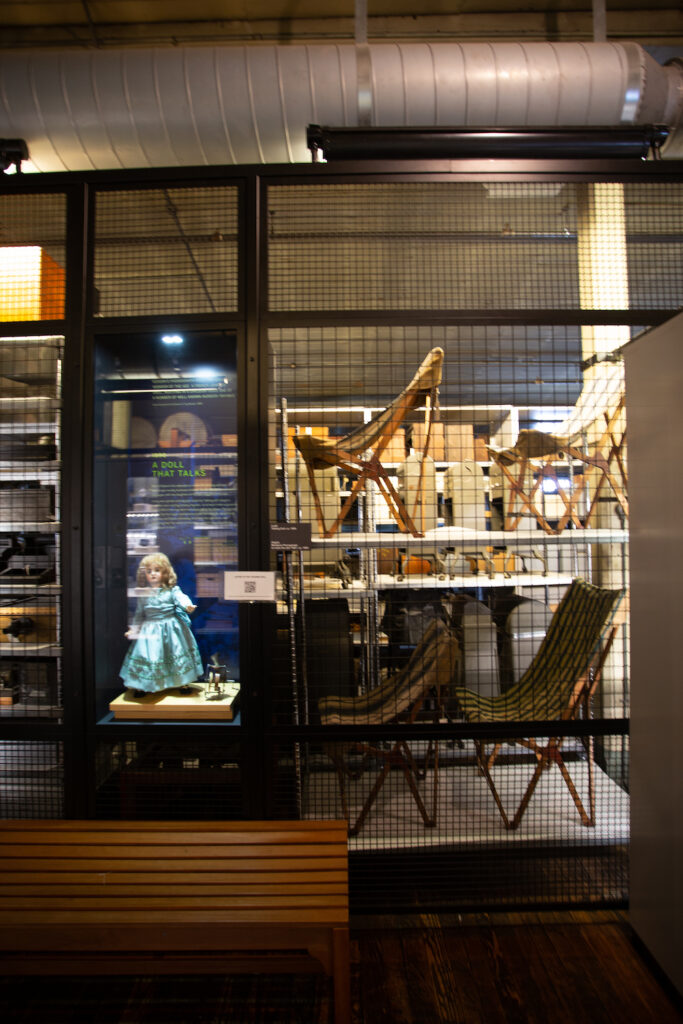
Behind the cabinets are shelves of open storage and workspaces for conservation, where you can see the sheer number of items housed and catalogued on site—like Edison’s canvas camp chairs from when he would take camping trips with Henry Ford and other well-known friends, known as the Vagabonds.
It’s amazingly well-preserved, and I’m grateful for the foresight of both the Edison Company and the National Parks Service for keeping it here.
In the music room on the same floor, you can actually hear the technology of the day through ranger demonstrations of various phonographs.
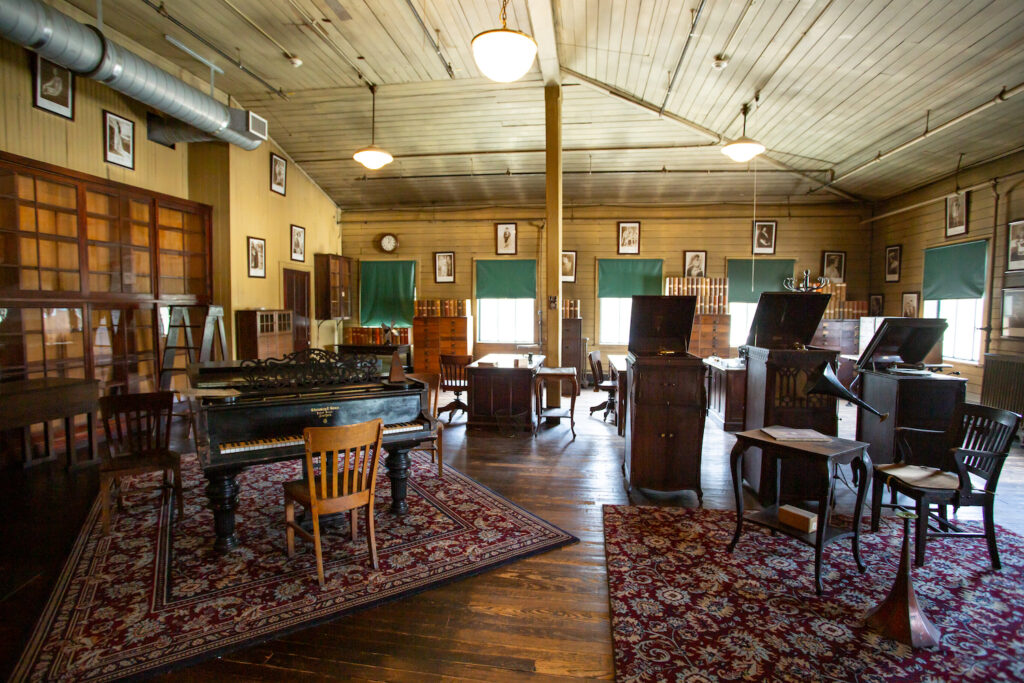
Fun fact! They Might Be Giants’ “I Can Hear You,” from their 1996 album Factory Showroom, was recorded in the laboratory. How long have I been listening to this song, yet never put two and two together until I was standing in front of the phonographs and wax cylinders??
Also on the property is a replica of the Black Maria*, the freestanding studio where Edison and team filmed some of the first motion pictures with his new camera known as the kinetograph.
*(It’s pronounced Muh-RYE-uh, the same as Maria Reynolds, all you Hamfans.)

The ingenious studio design was built on a rotating platform with a skylight window, which could be opened and angled in various ways so that the production could use consistent sunlight as it filmed.
Side note: I sort of became obsessed with Fred Ott, one of Edison’s right hand men, during our visit. Fred and his mustache appeared in some of the earliest films coming out of the labs, and he seemed like a fun jokester, the kind of guy of whom you’d say, “Fred Ott, you old so-and-so!”
(Thus sprung forth another inside joke between Dan and Casey.)
Glenmont, Edison’s home and estate just up the road in the Llewellyn Park gated community, is also part of the National Parks site.
However, we arrived too late in the day to secure a spot on one of the timed tours—and photography isn’t permitted on the house tour anyway. So you’ll have to just come and see it yourself.
VISITOR INFORMATION
THOMAS EDISON NATIONAL HISTORICAL PARK
211 Main Street, West Orange, NJ 07052
Open Wednesday-Sunday, 10:00 am-4:00 pm
NPS Fee: $15/person

TIP YOUR TOUR GUIDE
Like what you’re reading here?
I choose to keep my site ad-free and sponsorship-free, so please consider showing your appreciation by leaving a few dollars in my tip jar.